
Types of Crowdfunding Platforms: Choosing the Right Model
A lot has changed in how ideas, things, and enterprises obtain money. You don’t have to meet with banks or sponsors anymore; all you need to get started is a decent narrative and one campaign website. People now utilize internet organisations to generate money for a wide range of things, from businesses and real estate to social causes and artistic initiatives.
Even while crowdfunding seems straightforward at first, the hard part is creating or choosing the correct site. Every successful campaign has a clear strategy for how to get money, solid technology, and a lot of understanding about how people spend and trust money online.
Why the Crowdfunding Model Matters More Than You Think
One of the most common mistakes new founders make is assuming that “crowdfunding is crowdfunding.” In reality, the model you choose determines how money moves, how users behave, and how heavily regulated your platform will be. That’s why crowdfunding platform development should always start with a clear decision about which crowdfunding type you’re building — not just what the platform will look like.
For instance, a site that accepts contributions requires different things than one that deals with loans or stock donations. If you choose the incorrect model at first, you might run into legal issues, have trouble getting others to use it, or have to pay a lot to rebuild it later.
Technology and Experience Together
It’s not only about design when you make a website for a fundraising; you also have to think about money and technology. You need to check that individuals are who they say they are, that they obey the rules, and that they can improve. This includes payments, security, and following the rules. This is where development teams with a lot of expertise, like Jappware, come in. They assist businesses come up with financial solutions that work with the technology and the business logic of each crowdfunding model.
With that in mind, let’s speak about the primary sorts of crowdfunding platforms and how they function in the real world.
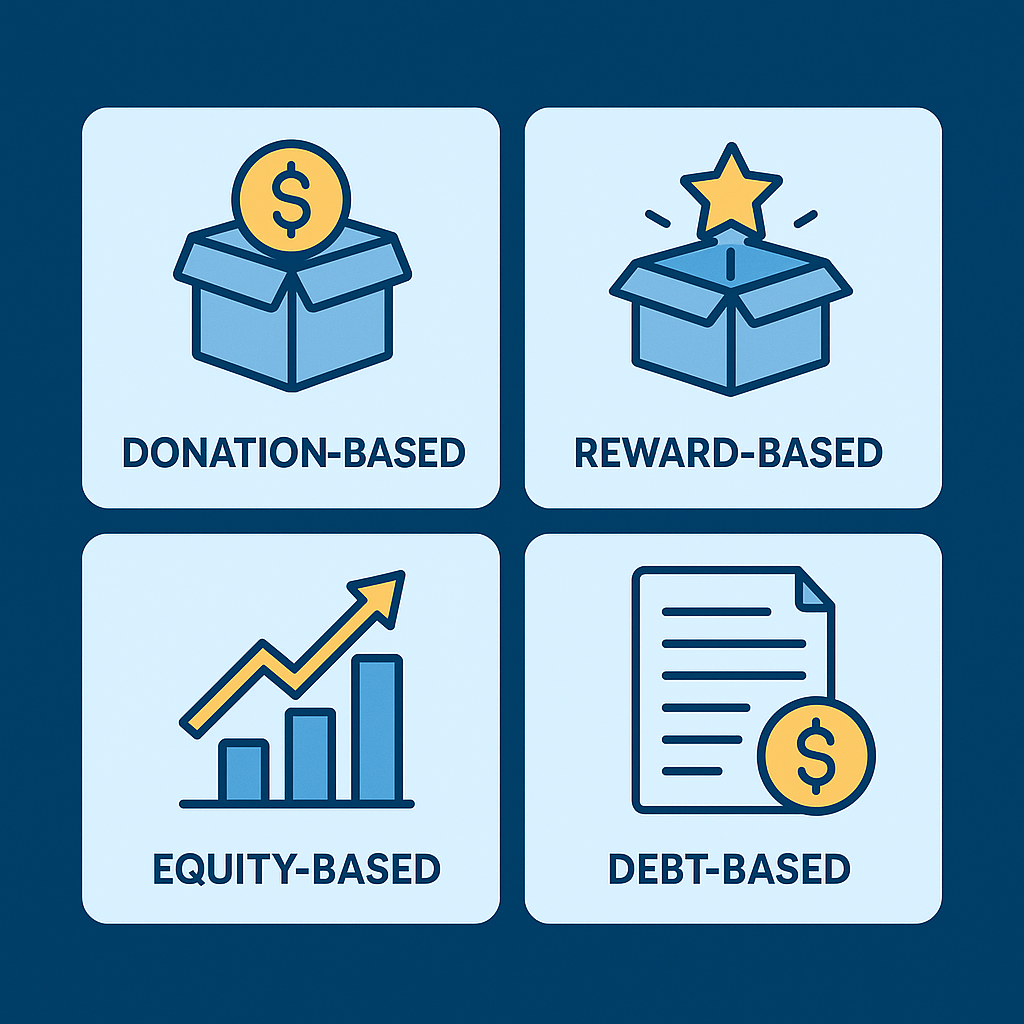
Donation-Based Crowdfunding
The donation-based crowdfunding approach is the simplest. People donate money freely, expecting nothing in return. People give money here for personal reasons, not financial ones. They want to aid a cause they care about.
This approach works best when people can accept it and observe how it operates. Storytelling, regular reporting, and clear explanations of how contributions will be utilised are particularly crucial for giving platforms. The restrictions are normally less rigorous when money isn’t involved, but it’s still crucial to be safe and prevent frauds.
People utilize donation-based platforms for things like charity, healthcare bills, crisis help, and community initiatives.
Reward-Based Crowdfunding
In reward-based crowdfunding, individuals provide money in return for a reward, which is distinct from commercial partnerships and presents. Donors provide money and receive something in exchange, such as unique content, limited-edition rewards, or early access to a product.
This concept is quite popular with fledgling businesses and artists who want to make things. It helps them turn the concept into a product by making sure there is a need for it and getting others to join in. But it also creates new difficulties. Fans may rapidly turn into critics if you don’t provide on time, don’t know how much to give, or don’t communicate well.
From a site’s point of view, reward-based crowdfunding has to be extremely cautious with the deadlines, reporting, and user expectations for each campaign.
Equity-Based Crowdfunding
People may acquire shares in firms via equity crowdfunding. Donors are owners, which makes things a lot more difficult than gifts or rewards.
Because stock is connected to shares, platforms have to follow tight standards. Making sure investors are who they say they are, filing legal reports, and making sure investors are who they claim they are are all extremely crucial. Equity crowdfunding is great because it lets firms who may not be able to receive regular venture financing get a lot of money and expand over time.
This strategy is appropriate for small firms and startups that are willing to be honest about how they run their company and follow the regulations.
Peer-to-Peer Lending: Debt-Based Crowdfunding
Peer-to-peer loans, often called debt-based crowdfunding, connect people who need money with lenders. People that assist out don’t gain ownership or perks; instead, they earn interest when the loans are paid back.
These sites employ a lot of credit scores and risk ratings. People want to know how much they will have to pay back and what the hazards are. This implies that owners of platforms must design ways for managing loans, payment plans, and addressing defaults that customers can trust.
Many individuals utilize debt-based models to get personal loans, small company loans, and other types of loans.
Real Estate Crowdfunding
Crowdfunding for real estate permits a lot of individuals to pool their money to pay for property initiatives. Depending on how the investment is set up, investors may obtain rental income, profit shares, or guaranteed returns.
This method has become popular very rapidly since it makes it easy for consumers to buy real estate. But it also makes things harder to understand and do lawfully. Investor reporting, property documentation, and valuation disclosure are all things that must be done properly.
Parts of stock and loan crowdfunding are used by a lot of real estate websites. Because of this, they need to have a strong technological framework, which is not simple to achieve.
Crowdfunding for Memberships and Subscriptions
Subscription crowdfunding is different from campaign-based strategies since it relies on support that occurs again and over again. People who give money on a regular basis do so to help artists or groups they care about.
This paradigm works well for instructors, independent journalists, and individuals who manufacture things. It makes money on a regular basis and establishes relationships that last instead of ones that end quickly. When it comes to the technological side of things, the biggest issues are continual billing, keeping users interested, and controlling losses.
Choosing the Right Model for Your Platform
There isn’t one contribution strategy that works for everyone. What you want to do, your objectives, the law, and your long-term strategy all affect what decision is best. Some systems even employ a combination of several models, although mixed techniques require more sophisticated planning for development and safety.
The most essential issue is to make sure that the finance strategy meets the needs of the users. Donors are more likely to trust you if they know precisely how their money will be used and what they will receive in return.
Final Thoughts
Crowdfunding is no longer simply a transitory affair. There are many various kinds of banks in this system, and they all function in their own ways. Before you construct or start a platform, you need to know what those distinctions are.
Choosing the appropriate way to raise money early on can help you save time, money, and worry. If there is a clear purpose, a smart design, and the proper technology partner, a crowdfunding site may become a well-known destination for ideas, investments, and groups to meet.