
4 Top Digital Freight Management Platforms for Logistics Companies
Most freight forwarders are still stitching together four different systems just to move one shipment. Digital Freight Management Platforms exist to fix that, yet picking the wrong one means you’re still wrestling with fragmented carrier networks, manual BOL paperwork, and zero real-time visibility across multimodal legs. After reviewing dozens of platforms used by forwarders, NVOCCs, and 3PLs across multiple regions, this guide breaks down four options worth your attention, what they do well, and which type of operation each one actually fits.
Why Digital Freight Management Platforms Are Worth a Closer Look
Freight operations depend on precision, but disconnected systems often create delays, unclear shipment visibility, and unpredictable tender acceptance. Specialized freight management platforms unify carriers, invoices, and shipment data, helping improve delivery performance, control costs, and create a smoother carrier experience.
- Logistaas – Best for International Freight Forwarders and Consolidators
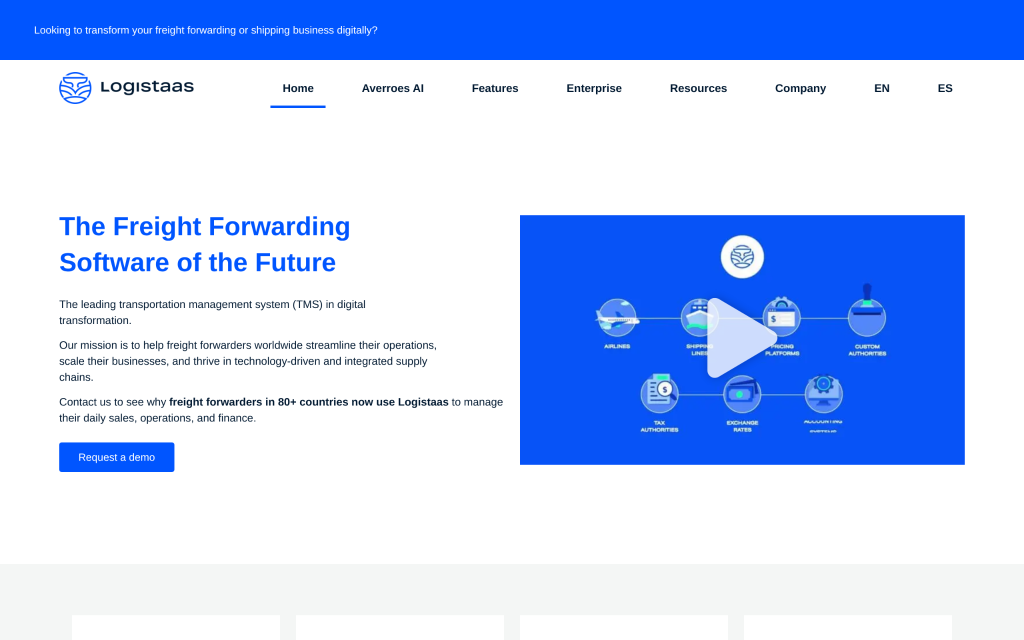
How Does Logistaas Create Value?
Logistaas is a transportation management system built for freight forwarders. It covers air, sea, land, and customs operations in one platform, alongside a freight-specific CRM, native accounting, and automated e-invoicing across roughly 30 jurisdictions. The platform connects to ocean carriers via INTTRA and airlines through Champ Traxon, Descartes, and Cargonaut, which means forwarders aren’t manually chasing rate updates. It’s used in more than 80 countries and processes hundreds of thousands of shipments annually.
What Users Are Actually Saying:
Logistaas holds a 4.5 out of 5 rating on Capterra from 33 reviews, with ease of use scoring even higher at 4.6. The most repeated criticism is difficulty searching through historical invoices and documents, and mobile functionality that trails behind the desktop version. For a platform covering this many freight workflows in one place, that’s a manageable trade-off for most operations teams.
- GoFreight – Best for Freight Forwarders and NVOCCs
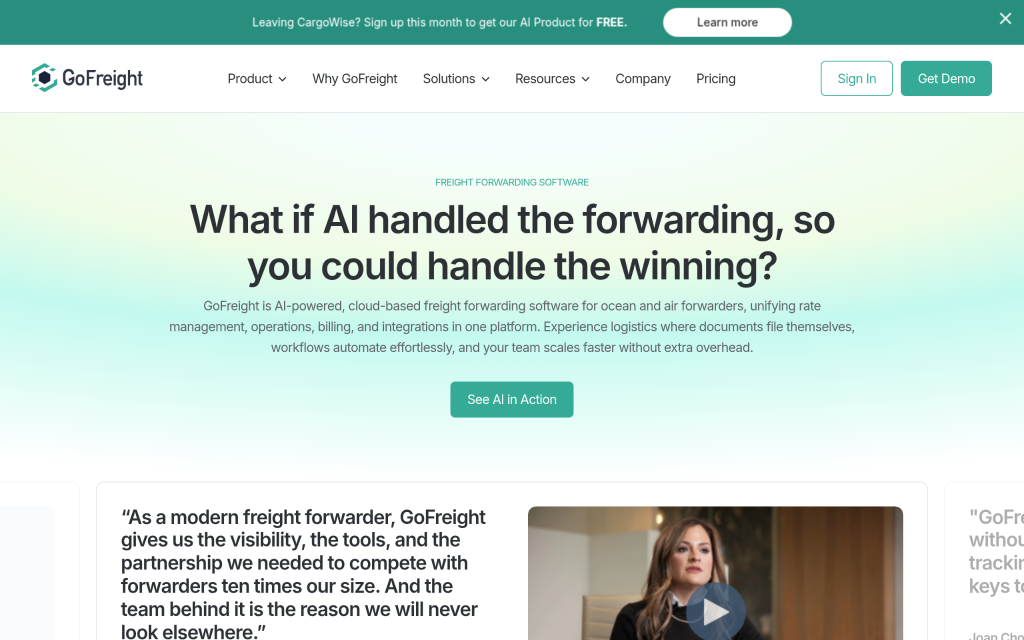
How Does GoFreight Create Value?
GoFreight is a freight forwarding platform that pulls ocean, air, and land operations into a single system. Shipment booking, security filings, real-time visibility, customer-facing applications, accounting, and payment processing all live in one place (which removes a lot of the tab-switching that slows down ops teams).
What Users Are Actually Saying:
GoFreight earned recognition as one of the 15 Most Promising Logistics Tech Startups of 2019, and customer-reported results are strong across revenue and cost metrics. The platform resonates most with forwarders who want a modern, fast-moving product rather than a legacy system that gets updated every couple of years.
- Linbis – Best for Freight Forwarders, 3PLs, and Distribution Centers
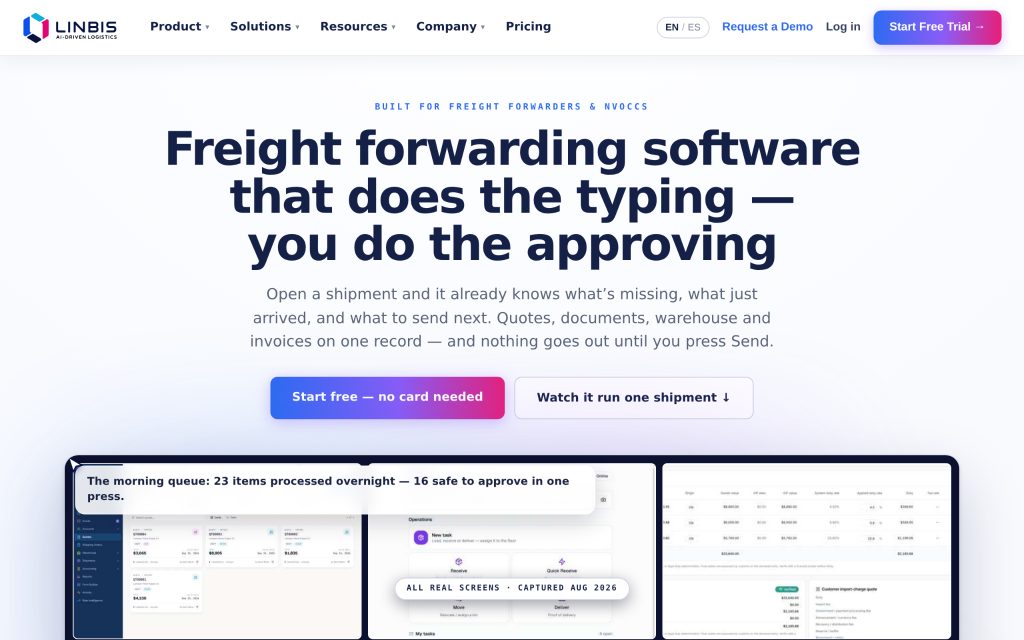
How Does Linbis Create Value?
Linbis is a logistics platform covering freight forwarding, warehouse management, quotation, and dispatch in one place. It supports air, ocean, and ground freight modes, and its document generation cuts down the manual data entry that causes errors at customs and during carrier handoffs.
What Users Are Actually Saying:
Public review data for Linbis is limited at this stage, so it’s harder to spot patterns the way you can with more heavily reviewed platforms. That said, the feature set is purpose-built for logistics, and the multi-modal, multi-function scope gives it strong coverage for teams managing complex freight and warehouse workflows at the same time.
- Shipthis – Best for Freight Forwarding and Logistics Operations Management
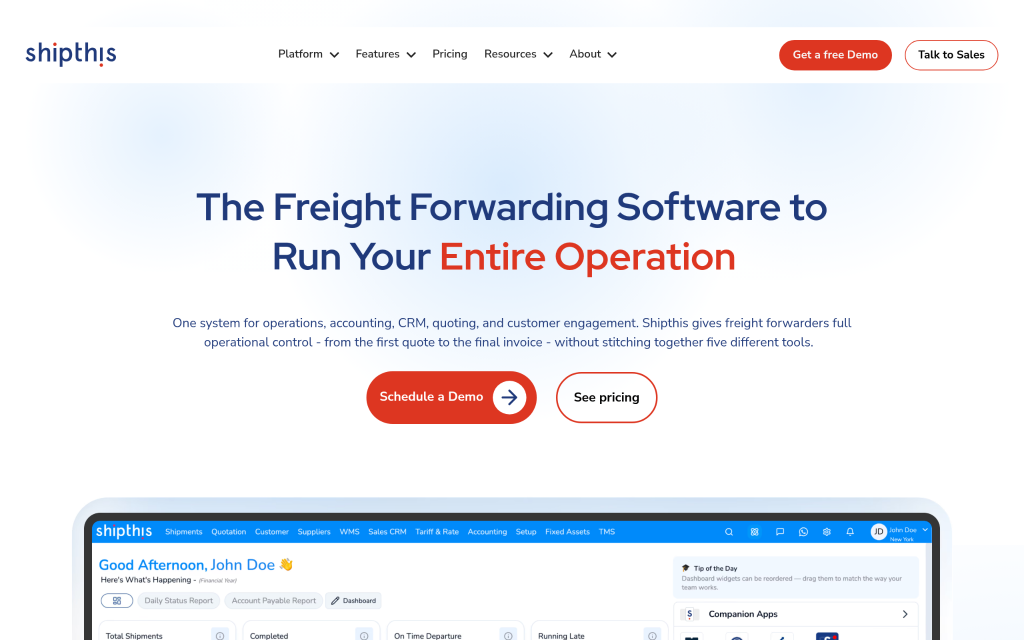
How Does Shipthis Create Value?
Shipthis is a freight forwarding and Freight ERP platform covering air, sea, road, and rail in a single plan. The module list is unusually complete: shipment management, accounting and finance, sales CRM, quotation management, tariff and rate management, customer portals, warehouse management, and vendor portals all come included.
What Users Are Actually Saying:
Detailed public review data for Shipthis is still building up, so a full picture isn’t available yet. From what’s out there, the platform’s pricing and feature depth attract forwarders who want enterprise-level functionality without the enterprise price tag, and the AI document intelligence capability gets called out as a genuine time-saver.
Methodology Behind These Picks
Data Collection
A broad list of freight management platforms was compiled using logistics directories, review sites like Capterra and G2, industry publications, and company sources. Product documentation, case studies, and customer references were reviewed to understand real-world use.
Shortlisting
Platforms without verified logistics use, reliable reviews, or a visible freight customer base were removed. Review quality, not just ratings, was considered to identify tools with consistent user feedback.
Fact-Checking
Claims from selected platforms were compared against customer experiences and third-party feedback. Reported outcomes were treated as indicators rather than guarantees, with differences between marketing claims and user results noted.
Industry Reputation
The evaluation included third-party recognition such as industry awards, research mentions, and logistics media coverage to assess credibility beyond company claims.
Freight Management Track Record
Final selections focused on platforms with proven freight forwarding capabilities, including shipment visibility, documentation, carrier connections, and multimodal workflows supported by real customer evidence.
The Verdict
Picking the right digital freight management platform comes down to fit, not hype. Logistaas works well for international forwarders who need native accounting alongside operations. GoFreight suits high-volume NVOCCs chasing automation. Linbis covers teams blending forwarding with warehouse management. Shipthis offers strong functionality at a low starting price. Logipulse fits smaller forwarders watching their budget. As freight operations grow more complex, purpose-built platforms will keep pulling ahead.