How Visual Product Customizers Drive Higher Conversions and Lower Return Rates for Specialty Brands
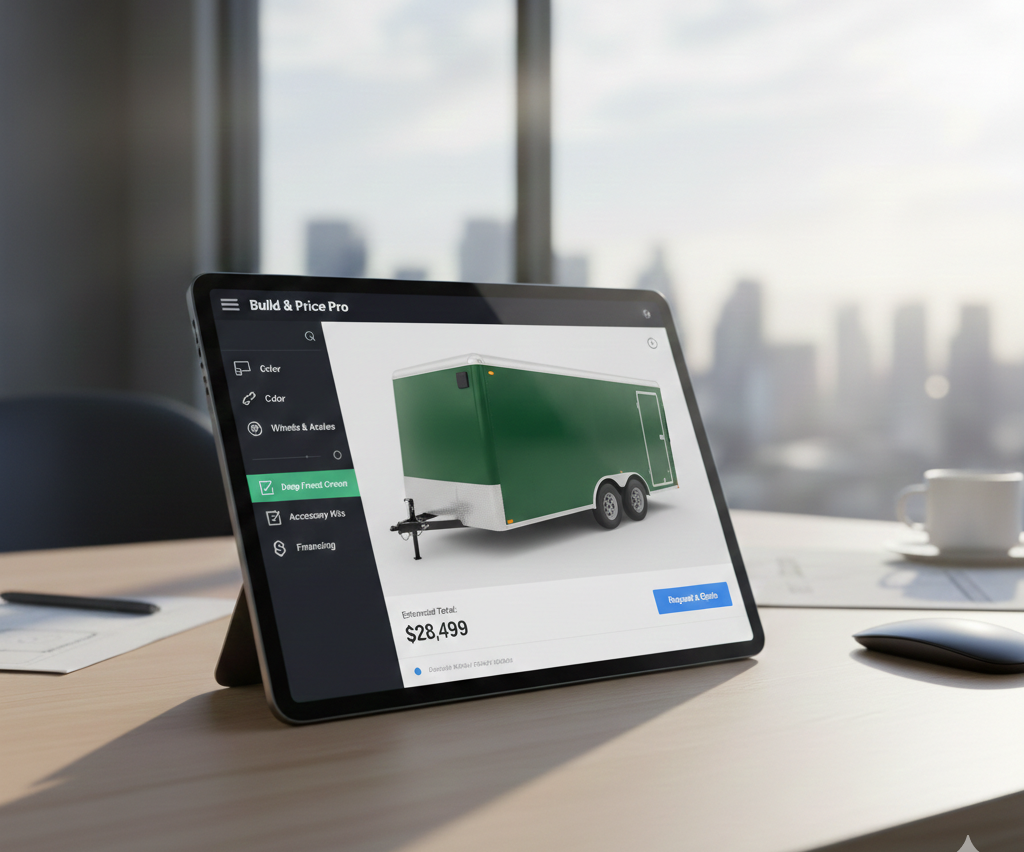
For specialty manufacturers of boats, trailers, RVs, and more; direct-to-consumer (DTC) brands, and B2B enterprises selling configurable goods, standard static product pages often fall short. When buyers configure custom cabinetry, assemble specialty trailers, select boat features, or tailor high-end architectural fixtures, static photos and generic drop-down menus leave too much to the imagination. This is where a visual product customizer comes into play.
When a customer cannot clearly see what their choices look like in real time, hesitation sets in. They abandon carts, overwhelm sales teams with repetitive clarification questions, or place orders based on guesswork—leading to costly returns and frustrated clients.
An interactive product customizer changes that dynamic. By providing instant visual validation for every material, dimension, and component chosen, specialty brands turn a high-friction decision process into an engaging, confidence-building experience.
Here is an in-depth look at how visual product configurators accelerate conversions, cut return rates, and streamline manufacturing handoffs.
1. Eliminating Buyer Hesitation Through Instant Visual Feedback
The Flaws of Drop-Down Menus
Standard e-commerce dropdown selectors force buyers to mentally assemble the final product. Selecting “Matte Black Finish” from one menu, “300 HP Honda Outboard” from another, and “Sport Package” from a third requires cognitive effort. If buyers cannot tell how those materials complement each other, friction increases.
This uncertainty is a primary driver of cart abandonment for specialty products. Buyers leave the page to look for customer photos on social media, search competitor websites, or delay the purchase indefinitely.
Real-Time Dynamic Rendering
Visual configurators replace guesswork with immediate, interactive feedback. Every click, toggle, and selection updates the product model dynamically on the screen:
- Color & Finish Harmony: Buyers see exact shades, textures, and finishes combined on the actual geometry of the product.
- Component Verification: When optional accessories, mounting brackets, or trim packages are selected, they snap into place visually rather than appearing as an abstract bullet point.
- Proportion & Scale: Dimensional adjustments reflect instantly, giving customers a clearer sense of scale and fit.
Removing ambiguity builds purchasing momentum. When shoppers know exactly what will arrive at their door, their confidence increases, speeding up sales cycles on both consumer and commercial transactions.
2. Increasing Engagement and Average Order Value (AOV)
Psychological Ownership Through Active Building
Static product pages encourage passive reading; visual builders invite active participation. When users start tweaking components, trying different colorways, or testing add-on features, they transition from casual browsers to active creators.
This shift triggers the endowment effect—a cognitive bias where people place higher value on things they have helped create. The minutes spent fine-tuning a custom build create psychological investment. Leaving the website without purchasing means walking away from their personalized design, which significantly increases follow-through to checkout.
Transparent, Natural Upselling
Traditional upselling often feels aggressive or disconnected from the product context. Checking a box for an additional fee at the bottom of a form offers little immediate perceived value.
Visual configurators present upgrades as natural enhancements to the overall design:
Upgrade Type | Traditional Approach | Visual Customizer Presentation |
Premium Material | Simple checkbox reading +$250 | Realistic texture rendering with enhanced depth and sheen |
Functional Add-On | Text-based accessories list | Accessory renders directly attached to the main assembly |
Custom Sizing | Static sizing matrix PDF | Interactive slider resizing the visual model in real time |
When buyers watch a premium finish or functional attachment improve the appearance and utility of their specific build, the price adjustment feels earned rather than tacked on. This visual transparency consistently drives higher average order values without relying on high-pressure sales copy.
3. Slashing Return Rates and Production Errors
The High Cost of the “Expectation Gap”
In custom manufacturing and specialty goods, returns are financially damaging. Unlike standardized commodities, custom configurations cannot simply be placed back on a warehouse shelf for the next buyer. They often require deep discounting, expensive retrofitting, or write-offs.
The vast majority of custom product returns stem from a single issue: the gap between what the buyer pictured in their head and what was delivered.
Precision Ordering for Seamless Fulfillment
A modern product builder creates alignment across the buyer, the sales team, and the manufacturing floor:
- Exact Visual Confirmation: The finalized model serves as an agreed-upon visual contract. The buyer confirms the design before submitting payment or requesting a formal quote.
- Automated Bill of Materials (BOM): Custom software does not just generate an image; it tracks every individual SKU, material code, and dimension behind the scenes. When an order is placed, it generates an automated, detailed BOM ready for the shop floor or ERP system.
- Elimination of Conflicting Specs: Software-defined rules prevent impossible configurations (e.g., selecting an engine package that does not fit the chosen chassis), preventing costly rework before fabrication begins.
By catching errors digitally during the configuration stage, businesses protect their profit margins and avoid the administrative drain of handling return claims.
4. Connecting the Customizer to Your Broader Sales Stack
A standalone visual tool is useful, but its true business impact multiplies when integrated into your wider technical ecosystem:
- B2B Dealer Hubs: Embed the configurator inside your custom dealer portal. This allows regional dealers, sales representatives, and distributors to build client orders with wholesale pricing tiers and live inventory constraints.
- Trained AI Support Integration: Combine your builder with an on-page AI agent trained on your technical documentation. If a buyer wonders whether a chosen finish holds up in marine environments, the AI agent answers instantly right inside the builder window.
Turn Your Website into an Interactive Digital Showroom
Specialty products deserve more than generic product pages. Investing in custom product configurator software bridges the gap between digital convenience and physical precision, turning your site into a full-scale interactive design studio.
At Digital Hill, we engineer custom interactive product builders tailored to the unique logic, variations, and manufacturing workflows of your business.
Ready to elevate your customer experience and protect your margins?
Contact Digital Hill to see our custom Product Builder software in action.