
Seedance 2.5 Is Coming: What Creators Need to Know
Seedance 2.5 is shaping up to be one of ByteDance’s biggest AI video updates. The upcoming model introduces three major improvements: native video generation up to 30 seconds, support for up to 50 multimodal references, and local editing that can modify parts of a video without recreating the entire scene.
These upgrades aim to solve some of the biggest challenges in AI video creation: short generation lengths, limited creative control, and difficulty fixing small mistakes.
What Is Seedance 2.5?
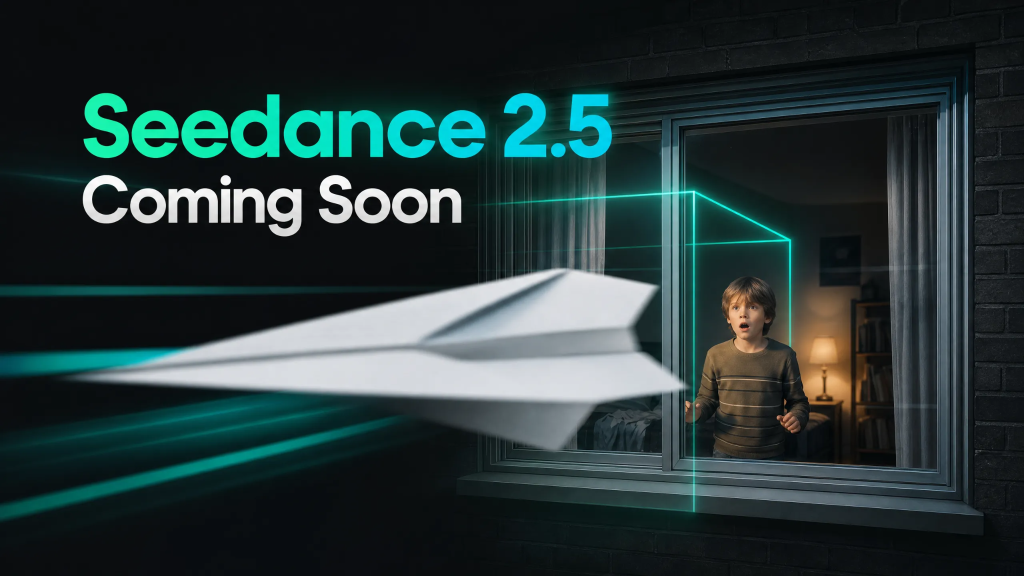
Seedance 2.5 is an upcoming AI video model from ByteDance, the company behind the Seed model family. It builds on the multimodal approach introduced by Seedance 2.0, allowing creators to use more than just text prompts.
Instead of describing everything with words, creators can provide images, videos, audio, and other visual references to guide the generation process. This is especially useful for filmmakers, marketers, and designers who need control over characters, products, environments, camera movement, and visual style.
Seedance 2.5 has been publicly announced, but final details such as pricing, access, regional availability, and full technical specifications have not yet been confirmed.
How Seedance 2.5 Improves on Seedance 2.0
Seedance 2.0 introduced multimodal video creation with support for text, images, video, and audio inputs. Seedance 2.5 appears to expand this foundation by improving three important areas:
- Longer video generation
- More reference control
- More flexible editing
The goal is to move AI video creation from generating individual clips toward building more complete production workflows.
Key Seedance 2.5 Features
Native Video Generation Up to 30 Seconds
One of the biggest announced upgrades is the ability to generate native 30-second video clips.
Longer generation can help creators produce more complete scenes without combining multiple short clips. Potential use cases include:
- Product advertisements
- Short cinematic scenes
- Character performances
- Social media videos
- Fashion and music visuals
However, longer duration does not automatically guarantee better quality. The biggest challenge remains consistency: keeping characters, products, backgrounds, and motion stable throughout the entire clip.
Up to 50 Multimodal References
Seedance 2.5 is expected to support up to 50 reference assets, allowing creators to provide more detailed creative direction.
A reference package could include:
- Character portraits
- Clothing and style references
- Product images from different angles
- Location photos
- Storyboards
- Motion references
- Audio examples
The advantage is not simply uploading more files. Good organization is still important. A smaller set of carefully selected references may perform better than many unrelated images.
Creators should organize references by purpose, such as character, environment, camera, action, style, and sound.
Local Video Editing
Another major improvement is local editing, which could allow creators to change specific parts of a video while keeping the rest unchanged.
Current AI video workflows often require full regeneration when one detail is wrong. Local editing could make corrections easier, such as:
- Changing a product appearance
- Adjusting clothing details
- Removing unwanted objects
- Modifying background elements
- Creating different product versions
This feature could significantly improve workflow efficiency, especially when most of a generated video is already usable.
Seedance 2.5 for Different Creators
Filmmakers
An effective AI movie generator needs to do more than produce an attractive shot. It must preserve the same character, setting, visual tone, and spatial logic while a scene develops. Longer generation, structured references, and focused corrections could help Seedance move closer to that goal.
For AI filmmakers, longer generation and stronger reference control could help create more continuous scenes. A project could include character references, costumes, locations, storyboards, and camera instructions to better maintain creative consistency.
Marketers and E-commerce Teams
A 30-second video provides enough space for many advertising formats, including a hook, product demonstration, and final call-to-action.
Reference support could help teams maintain brand consistency by providing:
- Product images
- Packaging details
- Brand colors
- Campaign styles
- Customer usage scenes
Local editing could make it easier to create variations for different audiences or markets.
Social Media Creators
Longer generation gives creators more room for storytelling. Instead of producing disconnected clips, they may be able to create videos with clearer setups, transformations, and endings.
However, shorter videos will still remain useful for simple viral content.
Designers and Creative Teams
Designers can use reference-based workflows to turn mood boards, storyboards, and visual concepts into generated videos. This creates a clearer connection between the original idea and the final result.
Final Thoughts
Seedance 2.5 focuses on three major limitations of current AI video tools: short clips, limited control, and difficult editing.
With native 30-second generation, up to 50 multimodal references, and local editing, the model could offer creators a more practical way to build complete scenes instead of isolated shots.
Its real impact will depend on final availability, pricing, and how well it performs in real creative workflows. If ByteDance delivers on these features, Seedance 2.5 could become an important tool for filmmakers, marketers, designers, and content creators.