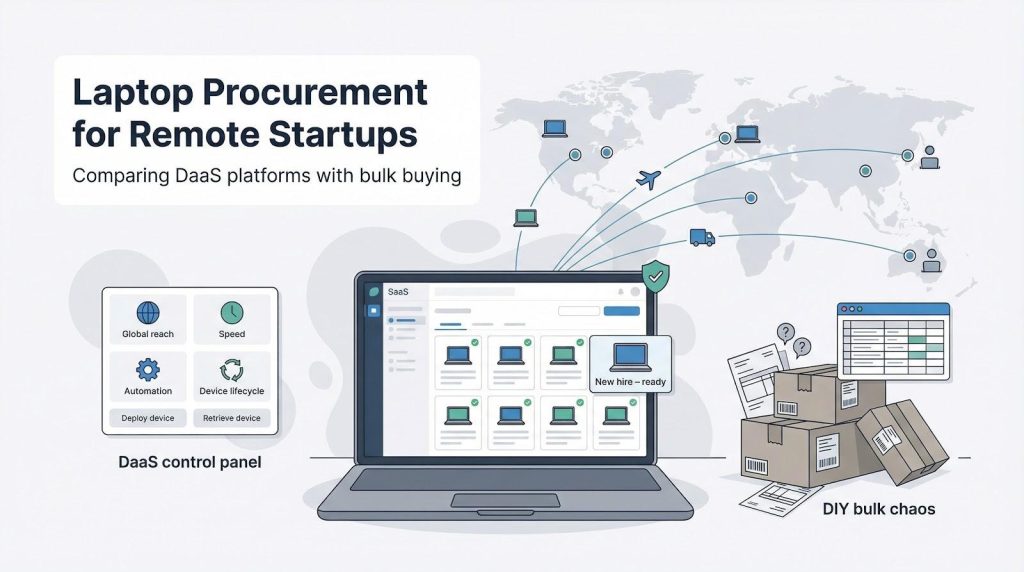
Top Laptop Procurement Services for Startups Compared: From DaaS to Bulk Sourcing
Remote hiring takes a click; getting a laptop to that hire still takes days. When just one machine shows up late, a new engineer twiddles thumbs instead of shipping code. No wonder 83 percent of procurement leaders put “digitize laptop sourcing” at the top of their fix-list (GoWorkwize).
According to Quipteams, companies that nail day-one logistics boost retention by 82 percent. Yet slow customs, blank images, and missing chargers can erase that goodwill fast.
The fix? Device-as-a-Service (DaaS) tools now ship ready-to-log-in hardware overnight, retrieve it with one click, and reveal every fee up front—while old-school bulk buying still works for some teams.
Over the next few minutes, we’ll compare every model, flag hidden costs, and hand you the exact questions that keep your next hire coding on day one.
How we judge a laptop procurement partner
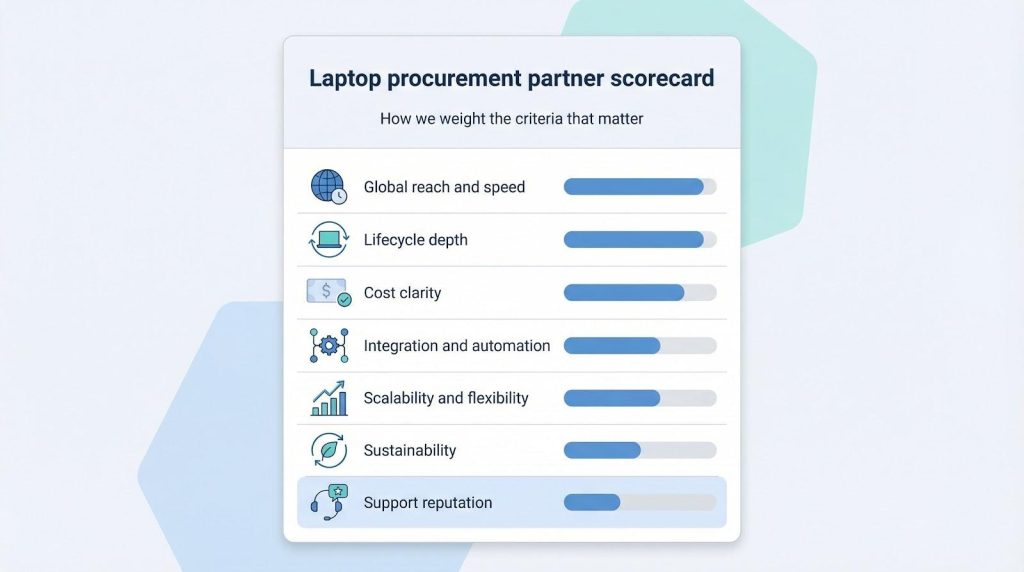
Before we compare vendors, we need a scorecard. Glossy demos blur together, and it’s easy to chase the shiniest dashboard. We built ours from the headaches we see founders handle every week.
Global reach and speed. A service has to get devices wherever your talent sits, fast. Overnight to New York is table stakes; shipping to Manila during a holiday-heavy month shows who truly keeps local stock.
Lifecycle depth. Procurement is chapter one. Imaging, mid-life repairs, retrieval when someone leaves, and certified data wiping matter as much. If a provider disappears after delivery, you inherit the messy middle.
Cost clarity. Startups live on runway, not endless budgets. We look for plain-English pricing that spells out duties, shipping, and any platform fees up front. Hidden surcharges destroy trust and wreck forecasts.
Integration and automation. Your HR system already knows a hire’s start date. Good platforms pull that data, order the laptop, and enrol it in MDM without another ticket. Automation saves headcount.
Scalability and flexibility. Growth is rarely linear. Some quarters you add fifteen engineers, others you pause hiring. Vendors that demand rigid seat minimums or exclusivity trap you in bills you can’t duck during a slowdown.
Sustainability. Investors and employees watch carbon footprints. Services that refurbish, recycle, or offset emissions give you an easy win for the planet and your brand.
We weight the first two criteria highest because late deliveries and lost laptops hit productivity hardest. Cost follows, then integration, sustainability, and finally support reputation. With the rubric clear, let’s see how each solution measures up.
Allwhere: Pay-as-you-go procurement and onboarding
Picture a service that treats hardware like take-out: order when you need it, pay once, forget subscriptions. That’s Allwhere in a nutshell.
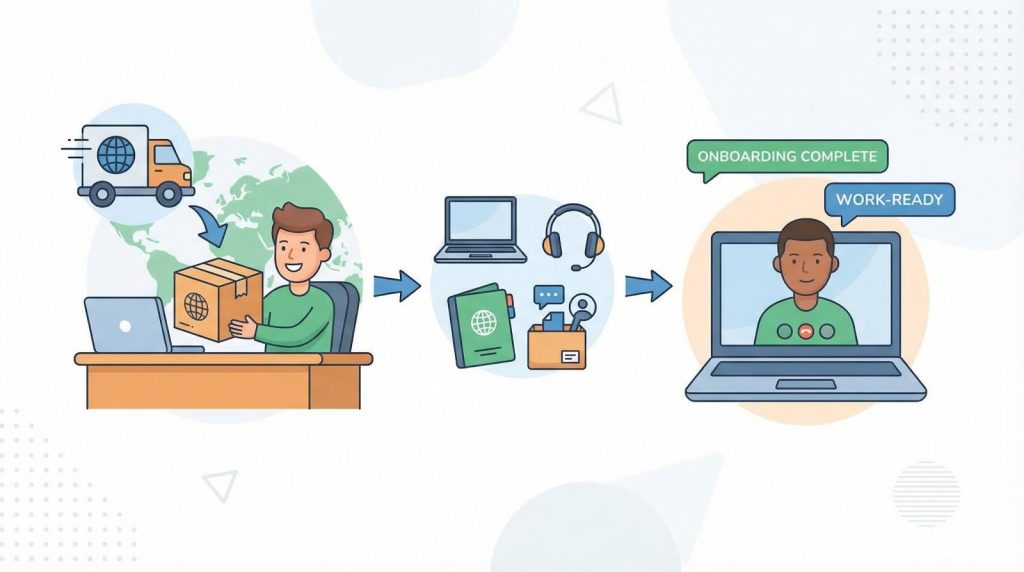
Allwhere keeps inventory in regional warehouses across roughly thirty countries. When you onboard a developer in Austin or a designer in Berlin, the system pulls the nearest Mac or Lenovo, images it with your security profile, and a courier drops it at the doorstep in as little as twenty-four hours. Most shipments arrive within five days, even when customs tries to slow things down.
Allwhere Laptop Procurement and Onboarding Dashboard Screenshot
Pricing stays simple. You see the laptop cost, local shipping, and taxes on one line-item invoice; no platform fee hides on page three. Because you pay only when you place an order, there’s zero waste during hiring pauses.
Lifecycle depth sets Allwhere apart. The same dashboard that triggers a delivery also schedules a pickup when someone exits. Returned devices are wiped, refurbished, or stored for your next hire. HR and identity integrations finish the loop so IT never re-types a name.
Founders can get started here and ship a pilot device in minutes.
GroWrk: global reach, local control
Growth rarely respects borders. Hire a data scientist in Lagos, another in Lima, and GroWrk still puts a laptop at each door within a week. The secret is 150-plus country coverage backed by local warehouses, so couriers clear customs before you even hear the word delay.
Pricing stays predictable. There’s no platform fee or subscription to tally. You can rent devices or buy them outright, then pay only for what ships. That ownership choice matters when you plan to recycle hardware through multiple employee lifecycles and squeeze every dollar of depreciation.
GroWrk’s dashboard feels more like Zapier than IT asset management. Forty-plus native integrations pull data from your HRIS, enrol new machines in MDM, and sync asset fields to finance without brittle workarounds. When an employee leaves, a retrieval workflow fires automatically, and the courier shows up with a return box before the goodbye cake cools.
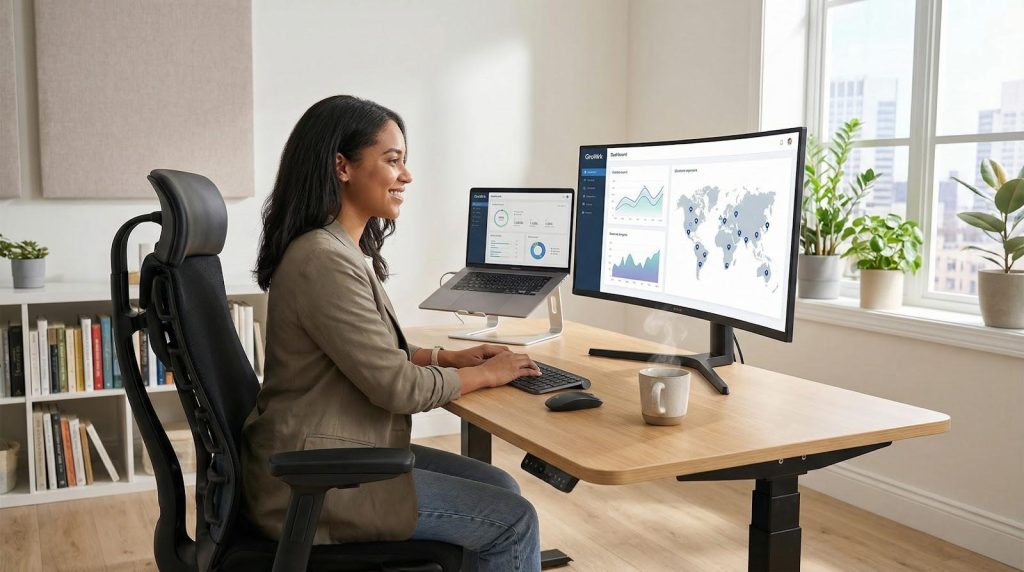
GroWrk Global IT Device Lifecycle Management Dashboard Screenshot
In short, GroWrk suits startups that operate worldwide without locking them into long leases or a single hardware brand.
Workwize: all-in-one subscription desk
Workwize promises calm budgeting on a flat monthly bill. Pay eight to eleven dollars per user, and every laptop, monitor, or standing desk ships pre-configured and lands on the employee’s porch within five to ten business days. One portal handles everything, from approving a MacBook for a new engineer to bundling a headset, chair, and company swag in the same box.
Because costs rise in step with headcount, finance teams prize the predictability. The flip side: sudden hiring spikes translate into instant budget spikes. Factor in the platform fee some tiers add before you celebrate the quote.
Set-up takes patience. You map your catalogue, budget limits, and approval rules up front. The reward is a self-serve store where managers click once and IT never touches a shipping label. For leaders who want a ready-made remote office and don’t mind a subscription metre running, Workwize covers every need.
Firstbase: white-glove service, tight handcuffs
Firstbase helped invent remote DaaS and still feels high end. Regional hubs in more than one hundred fifty countries clear customs in advance, so a fully imaged laptop reaches a new hire in about a week. Unbox, sign in, start coding, that’s the promise.
Warehousing, zero-touch deployment, mid-cycle swaps, and end-of-life recycling all sit under one flat monthly fee. Finance likes the single invoice. IT enjoys never peeling bubble wrap.
The catch is exclusivity. Once you sign, every corporate laptop must flow through Firstbase for the entire contract. Need a dozen specialty rigs from another vendor? No luck. Multi-year terms save admin time but remove exit ramps if pricing shifts or service slips.
Firstbase suits startups with fifty-plus employees that want the Rolls-Royce treatment and are comfortable handing over both the keys and the map for the long haul.
Hofy: gear that arrives green and on time
Hofy stakes its reputation on two promises: global consistency and a lighter carbon footprint. Regional warehouses across more than one hundred twenty countries hold standardised laptop kits, so a new hire in Nairobi unboxes the same top-spec machine as her counterpart in London. Most deliveries land in three to five days, customs paperwork included.
You don’t own the devices. Instead, you rent them for a flat monthly fee that bundles maintenance, hot-swap replacements, and end-of-life recycling. Hofy offsets every shipment and refurbishes gear whenever possible, then supplies certificates so you can prove zero e-waste in the next ESG slide.
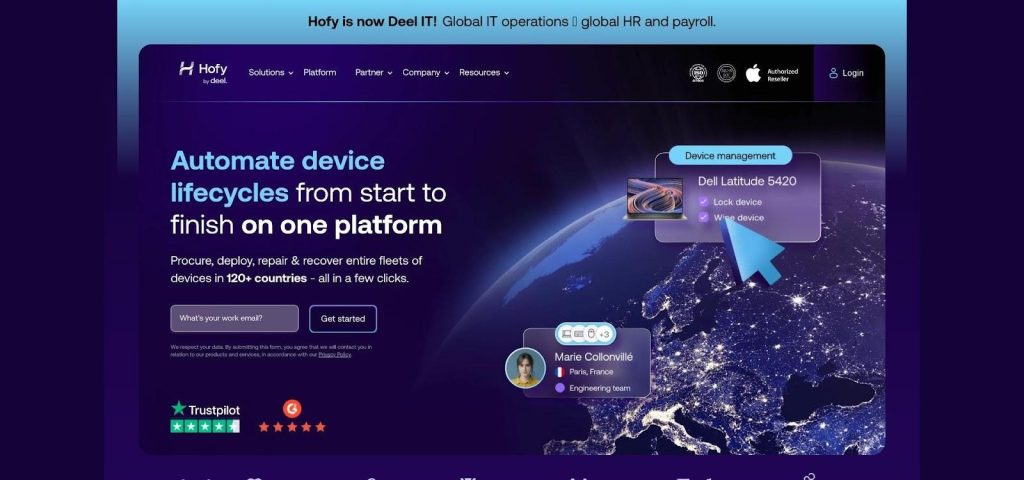
Hofy Sustainable Global Laptop Rental and Lifecycle Platform Screenshot
HR integrations push start dates straight into the workflow. An exit triggers a courier pickup, secure wipe, and redeploy; no awkward emails chase missing hardware. Hofy fits teams that put sustainability right next to speed on the priority list.
Unduit: freemium power for process nerds
Unduit feels more like a workflow engine than a shipping service. You sign up free, connect your HR, ITSM, and finance tools, and watch asset data flow in. When you order a laptop, the platform adds a small transaction fee instead of a subscription, so costs rise with volume, not time.
Coverage spans more than eighty countries, but deliveries take seven to twenty-one days because Unduit sources gear on demand rather than stocking global shelves. The upside is control: you can map an approval chain, push tickets to ServiceNow, and even track devices you bought elsewhere, all in one dashboard.
If you’ve got a process-minded IT lead and want maximum flexibility without long contracts, Unduit brings enterprise muscle on a startup budget.
OEM programs: leasing straight from the source
Going direct to Dell, HP, or Lenovo sounds simple: choose a model, sign a twenty-four or thirty-six-month lease, and enjoy enterprise support straight from the maker. Hardware turns up built to order, often within one to four weeks depending on region.
Monthly payments spread the cost, and bundled warranties give you next-day repairs instead of ticket ping-pong. Standardising on one brand keeps IT images clean, too.
But lock-in looms large. You commit to a single vendor, a multi-year term, and usually a minimum device count. Retrieval sits on your shoulders; the OEM won’t chase a laptop hiding in a former employee’s spare bedroom. If your org runs mixed Mac-and-PC stacks, you’ll need another solution for the Apple half.
Direct leasing shines when you already favour one ecosystem and your headcount plan is steady, not when you pivot product and hiring in the same quarter.
Bulk DIY buying: control today, chaos tomorrow
Early-stage founders often open a CDW cart, snag five laptops on the corporate card, and call it a day. Up front it feels cheap and flexible. You own the gear, pick any brand, and skip monthly fees.
Trouble starts once hiring crosses borders. You’ll spend hours on customs forms, pay surprise import taxes, and hope couriers find a village address. Tracking assets in a spreadsheet works until the twelfth employee quits and “their” MacBook is nowhere to be found.
DIY buying is fine while everyone sits in one office and you refresh hardware every three years. The moment you add remote teammates, the hidden costs—time, tax, lost devices—snowball fast.
At a glance: comparing your options
If you’re skimming for the quick answer, start here. The table shows how each path stacks up on the metrics that matter: speed, price model, lifecycle help, integrations, and contract strings. Scan first, dive deeper later.
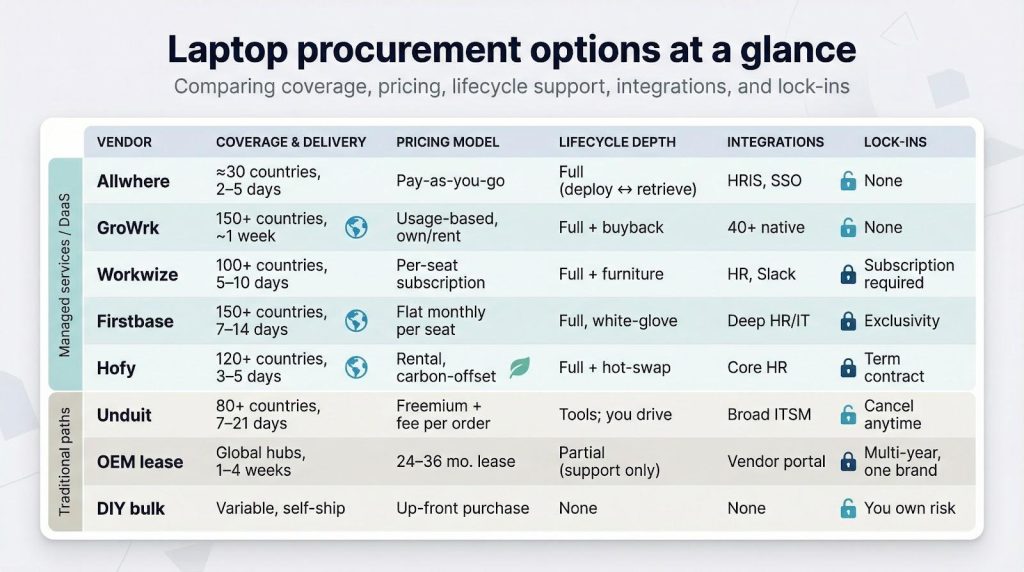
Vendor | Coverage & delivery | Pricing model | Lifecycle depth | Integrations | Lock-ins |
Allwhere | ≈30 countries, 2–5 days | Pay-as-you-go | Full (deploy ↔ retrieve) | HRIS, SSO | None |
GroWrk | 150+ countries, ~1 week | Usage-based, own/rent | Full + buyback | 40+ native | None |
Workwize | 100+ countries, 5–10 days | Per-seat subscription | Full + furniture | HR, Slack | Subscription required |
Firstbase | 150+ countries, 7–14 days | Flat monthly per seat | Full, white-glove | Deep HR/IT | Exclusivity |
Hofy | 120+ countries, 3–5 days | Rental, carbon-offset | Full + hot-swap | Core HR | Term contract |
Unduit | 80+ countries, 7–21 days | Freemium + fee per order | Tools; you drive | Broad ITSM | Cancel anytime |
OEM lease | Global hubs, 1–4 weeks | 24–36 mo. lease | Partial (support only) | Vendor portal | Multi-year, one brand |
DIY bulk | Variable, self-ship | Up-front purchase | None | None | You own risk |
Market and regulatory tailwinds
Money and new rules are both pushing DaaS into the spotlight. According to GlobeNewswire, analysts project the device-as-a-service market will jump from about $105 billion in 2023 to $1.68 trillion by 2032. When that much cash chases efficiency, vendors expand coverage, add integrations, and sharpen SLAs.
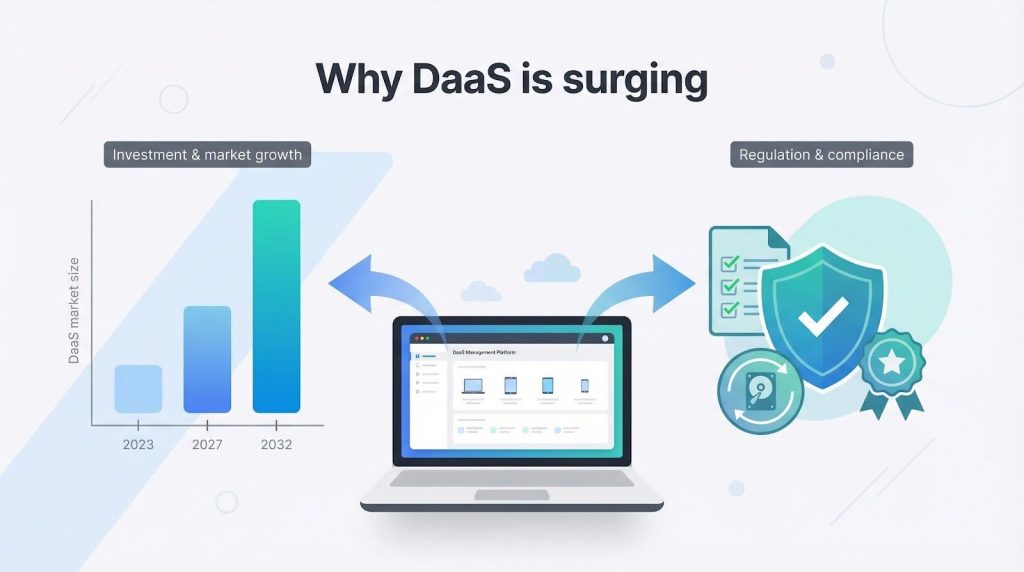
Regulators add their own push. New cybersecurity reporting rules now require public companies to prove how they wipe or recycle end-of-life hardware. Even if you’re pre-IPO, investors ask for the same receipts. Providers that include certified data destruction lift that paperwork off your plate.
Conclusion
You’re shopping in a sector flooded with investment and squeezed by compliance pressure. Expect faster global reach and richer features, but also tougher standards.