Top Proposal Software for Social Media Marketing Agencies
Sending a generic PDF proposal is a fast way to lose a social media retainer before the conversation even starts. The best proposal software for social media marketing agencies does more than format a price sheet. It ties proposal creation into the broader workflow of CRM, project delivery, and billing so nothing falls through the gap between “signed” and “started.”
The 4 platforms below cover different points on the spectrum from standalone proposal tools to full agency operating systems.
1. Verbial
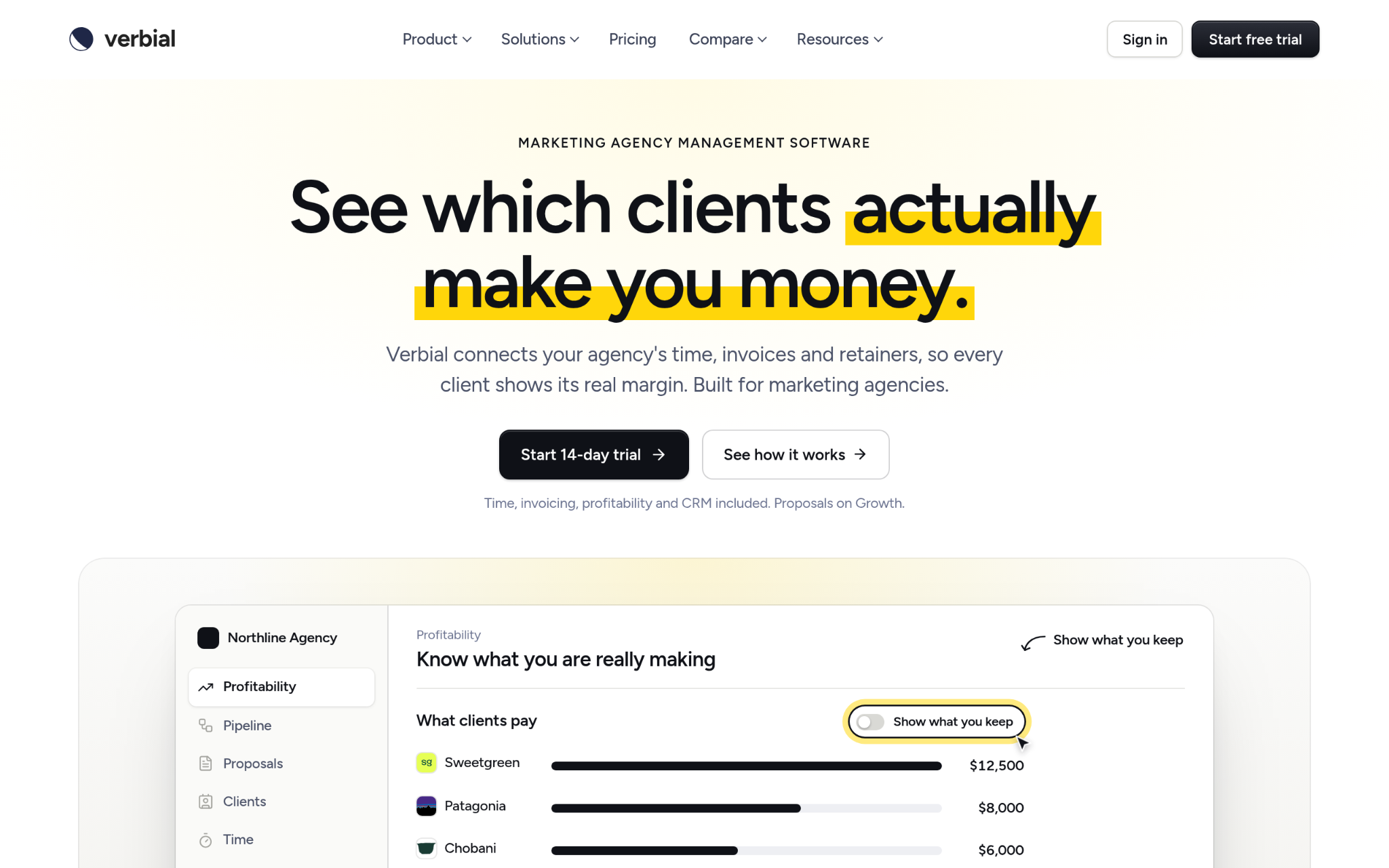
Verbial is built for marketing agencies, and that shows in how the platform connects proposal creation to the rest of the agency workflow. Teams can draft proposals with assisted creation, pull context from discovery calls, and collect e-signatures without routing clients through a separate tool. What separates Verbial from general-purpose proposal software for marketing agencies is that a signed deal flows straight into project delivery, time tracking, and invoicing with no manual handoff required. Social media agencies running mixed billing models – retainers alongside hourly or project-based work – get real billing flexibility through automated invoicing, plus margin visibility by client and team. White-label client reporting comes included, which matters when clients expect branded dashboards instead of raw data exports.
2. Kantata
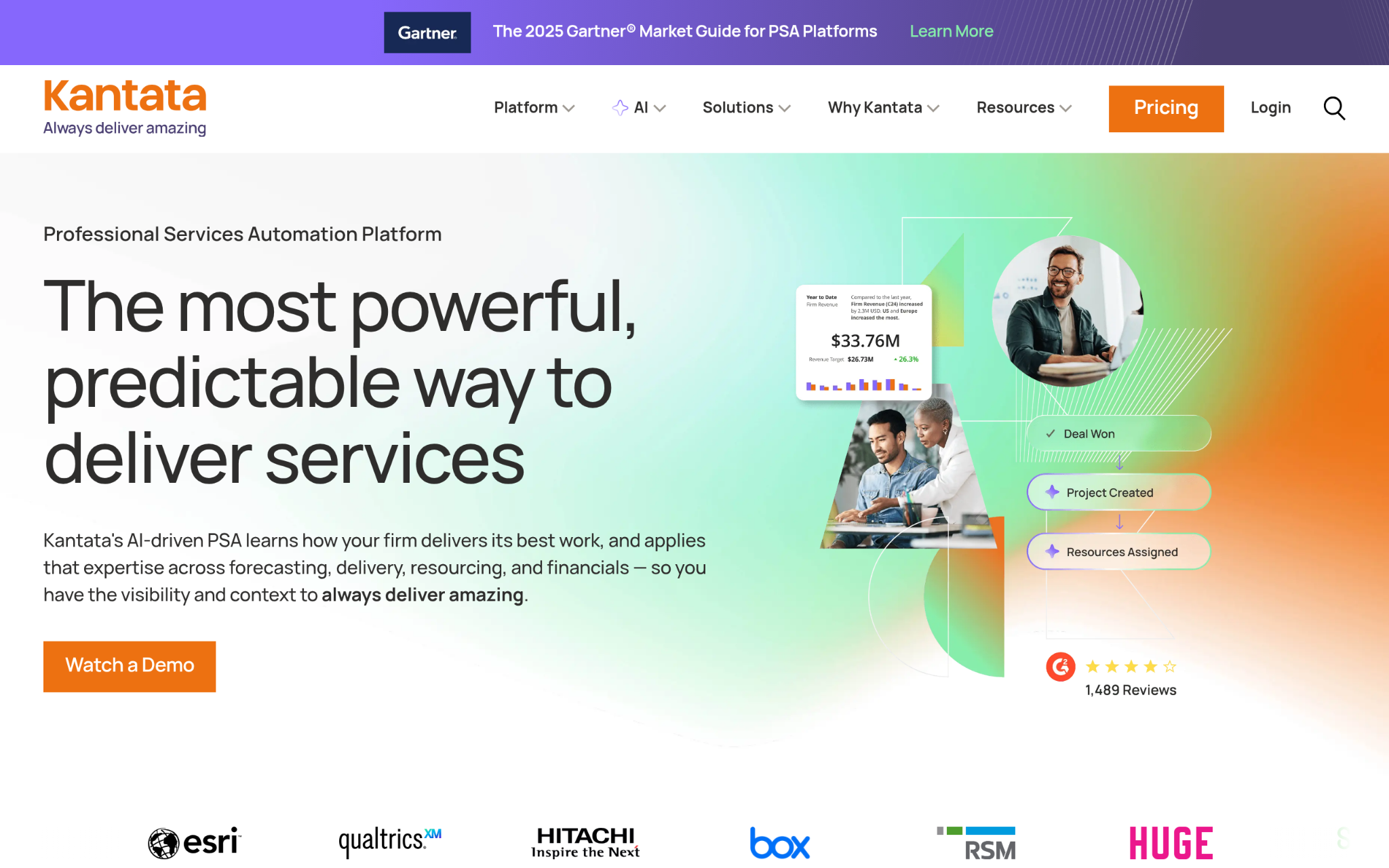
Kantata came out of the 2021 merger of Mavenlink and Kimble Applications, and it targets mid-market to enterprise professional services firms rather than boutique agencies. Its Expertise Engine learns from past engagements to sharpen resource matching and revenue forecasting. That’s useful for larger agency groups running multiple concurrent social campaigns across clients. It ships in two architectures: OX (standalone) and SX (Salesforce-native), which matters if the agency already runs sales on Salesforce. Deloitte, Sage, and Hitachi are among its cited customers.
Considerations: The 50-seat minimum and enterprise pricing make this a mismatch for smaller social media agencies.
3. Productive
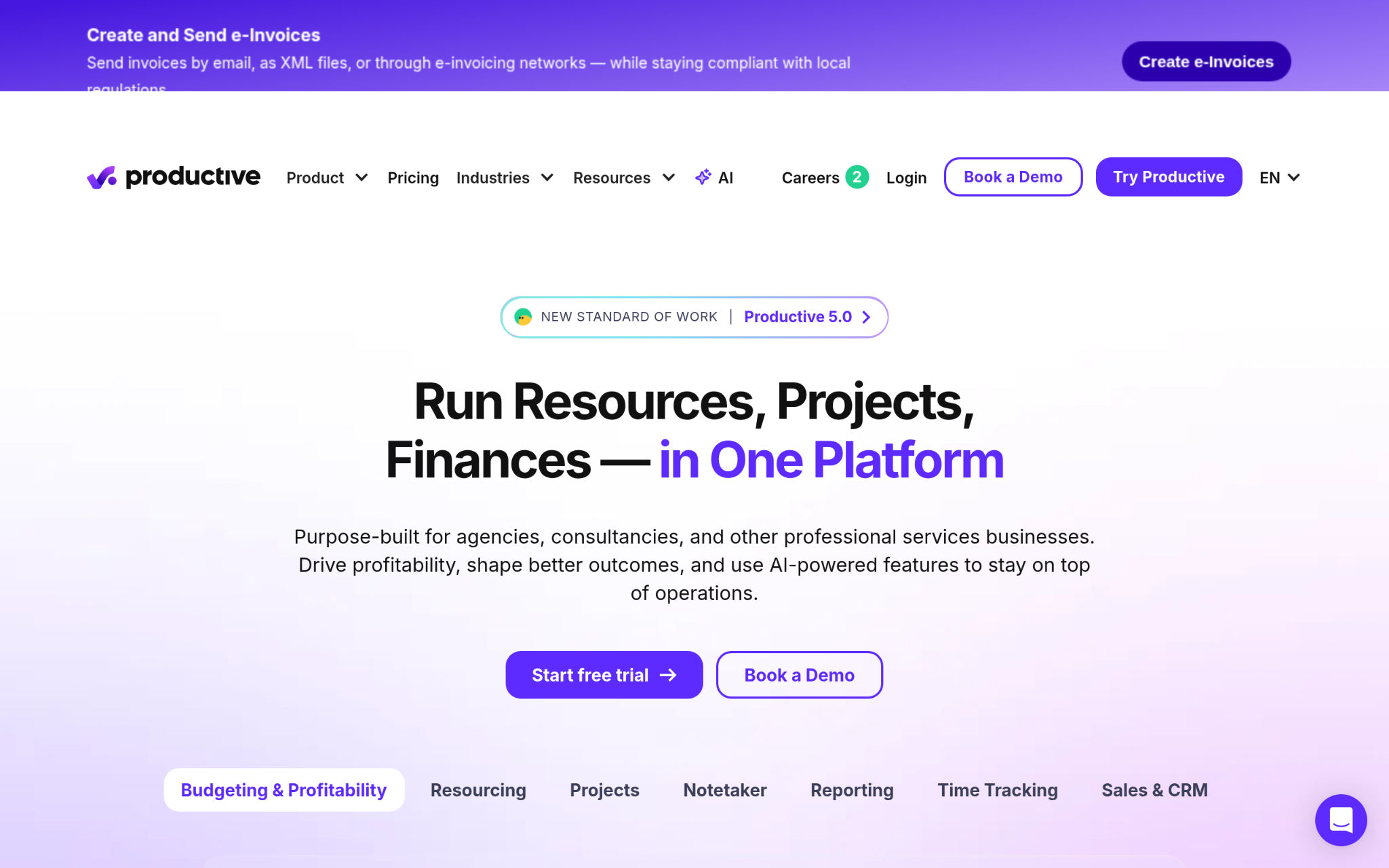
Productive was founded in 2014 by people who’d previously built a 350-person design and development firm. That firsthand experience shapes how the platform treats agency finances. It pulls together project management, resource planning, time tracking, margin analysis, invoicing, and a built-in sales CRM into one system. The CRM includes an AI notetaker, a practical touch for agencies logging discovery calls before writing proposals. Productive is bootstrapped and self-funded, with around 130 employees and roughly 200 customers as of 2026. It offers a free 14-day trial with no credit card required.
Considerations: Smaller customer base than some competitors; best suited for agencies that want a fully bootstrapped, independent vendor.
4. Teamwork
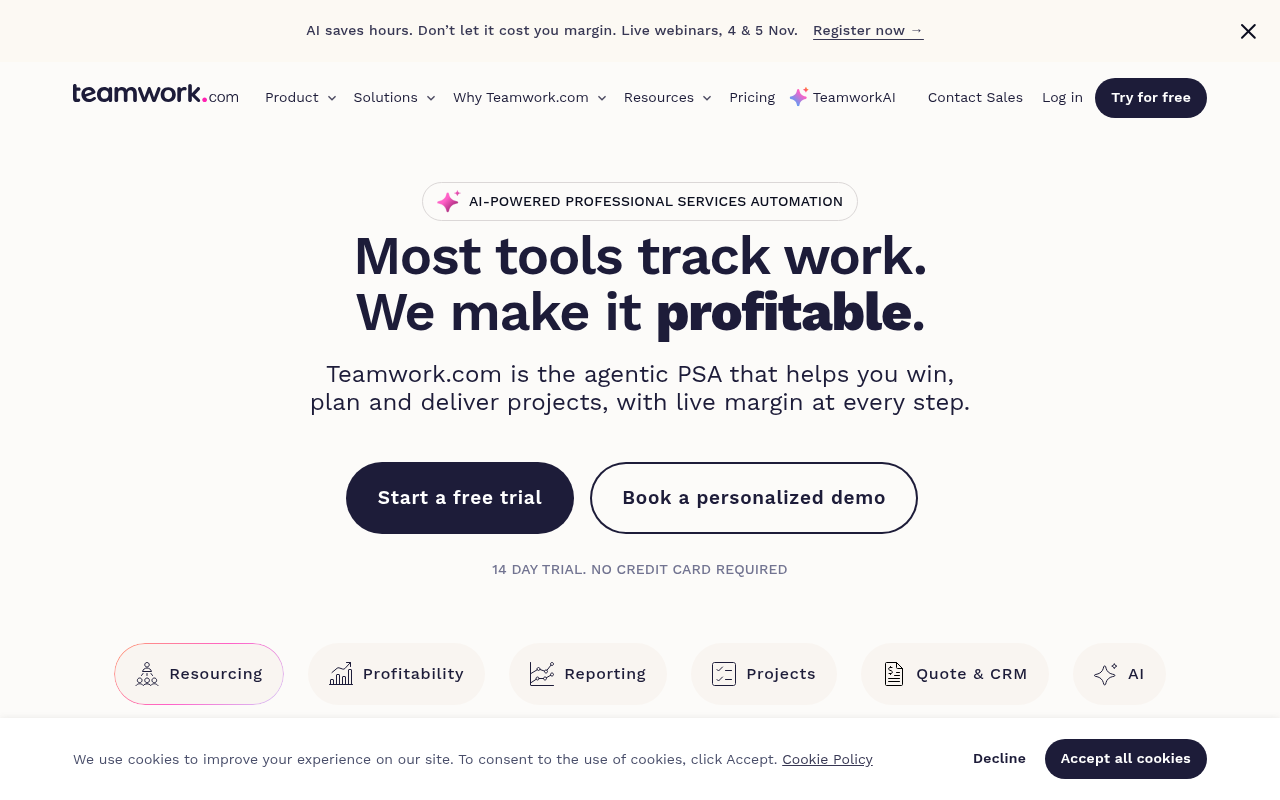
Teamwork has been running since 2007, bootstrapped for its first 14 years before taking a $70 million investment from Bregal in July 2021. It now serves over 20,000 customers, including Disney and Spotify. For social media agencies, the TeamworkAI layer handles project scoping and forecasting, and the platform reports a 23% average improvement in billable utilization for customers in their first year. Pricing starts at $9.99 per user per month, one of the more accessible entry points here. AI credits will move to usage-based billing in September 2026. Customers cite a 430% average three-year return on investment.
Considerations: The platform originated as project management software; proposal-specific functionality is less developed than in purpose-built tools.
Why proposal software matters for social media marketing teams
Social media scopes shift whenever platforms change their algorithms or clients change strategy mid-retainer. Many agencies also write proposals, track time, and invoice in separate tools, so details get lost at each handoff. Clients now treat a polished, signable proposal as standard, so agencies stand out by pricing work accurately from past project data.
Pricing and capabilities at a glance
Figures observed November 2026.
Feature / Dimension |
Verbial |
Kantata |
Productive |
Teamwork |
|---|---|---|---|---|
Starting price |
Not published (free trial available) |
Not published (custom quote) |
Not published (free trial available) |
$9.99/user/month |
Minimum seats |
Not published |
50 seats |
Not published |
Not published |
Proposal creation |
Yes, with e-signature and assisted drafting |
Not published |
Not published |
Not published |
CRM / pipeline |
Yes |
Not published |
Yes (AI notetaker) |
Not published |
Project management |
Yes |
Yes |
Yes |
Yes |
Time tracking |
Yes |
Not published |
Yes |
Not published |
Invoicing / billing |
Yes (retainer, hourly, project) |
Yes |
Yes |
Not published |
Margin tracking |
Yes (by client and team) |
Yes (margin forecasting) |
Yes |
Yes (margin control) |
Resource planning |
Yes |
Yes |
Yes |
Yes |
AI features |
Proposal drafting from calls |
Expertise Engine, agentic BI |
AI notetaker (CRM) |
TeamworkAI |
White-label reporting |
Yes |
Not published |
Not published |
Not published |
Free trial |
Yes |
No |
Yes (14-day, no card) |
Yes |
Salesforce-native option |
Not published |
Yes (SX architecture) |
No |
No |
Market focus |
Marketing agencies |
Mid-market / enterprise professional services |
Agencies, consultancies |
Client services teams |
Cells marked “Not published” reflect the platform’s public disclosure, not an absence of the feature.
Bottom Line
Picking the right tool from the top proposal software for social media marketing agencies comes down to agency size and where the biggest operational gap sits. Kantata serves large professional services organizations that need enterprise resource management; Teamwork offers strong mid-market coverage with accessible pricing. Productive suits agencies that want a fully connected system from a bootstrapped vendor with a narrower customer base.
The question is whether the tool handles proposals in isolation or ties them into how the agency actually runs. For social media teams dealing with shifting scopes and mixed billing models, that connection – from proposal to project to invoice – is where most of the operational value lives.